
In the world of online fraud prevention and transaction risk management, businesses rely on multiple layers of signals to assess whether a purchase attempt is legitimate. One of the commonly overlooked yet highly insightful signals is the Internet Service Provider (ISP) name associated with a visitor’s IP address. The process of analyzing and confirming this information is known as ISP Name Validation and it has become an increasingly important part of modern fraud detection solutions.
Understanding ISP Name Validation
ISP Name Validation is the process of verifying the ISP name tied to an incoming user’s IP address to determine whether it aligns with expected, trustworthy network providers. When a visitor performs a transaction or submits a form online, their device connects through an ISP. This ISP name can provide useful clues about their network environment, such as whether they are using a typical residential broadband provider, a corporate network or a suspicious data center.
Fraudsters frequently mask their identities by routing traffic through hosting providers, anonymous VPN networks or public proxies. These ISPs often stand out from normal consumer ISPs. By examining this attribute, merchants can better identify high-risk behaviors and block questionable traffic before it causes financial loss.
Why ISP Name Validation Matters
There are several reasons why ISP Name Validation is an essential component of a robust fraud prevention strategy:
- Detect Use of Hosting Providers and Data Centers
Hosting providers, cloud servers and data centers are rarely used by genuine shoppers. These environments are instead favored by fraudsters for automated bots, stolen credit card testing or identity spoofing. ISP Name Validation helps to flag such IP ranges quickly. - Identify Proxy, VPN and Anonymizer Usage
While VPNs are commonly used for privacy, they can also be used to hide fraudulent activity. Matching the ISP name against known anonymizer services can reduce risk and highlight suspicious sessions. - Segment Traffic for Better Enforcement Rules
Merchants can adjust their rules to allow or block traffic from specific ISPs. For example, an internal corporate network’s ISP may be considered safe, while a well-known VPN service may automatically warrant additional verification.
When ISP Name Validation Is Most Useful
ISP Name Validation is particularly powerful in industries where chargebacks are common, such as e-commerce, digital goods, subscription services and online gaming. It is also helpful for platforms that handle sensitive transactions, including financial services, membership-based portals and booking systems. Any business that relies on customer identity verification can benefit from analyzing the ISP data.
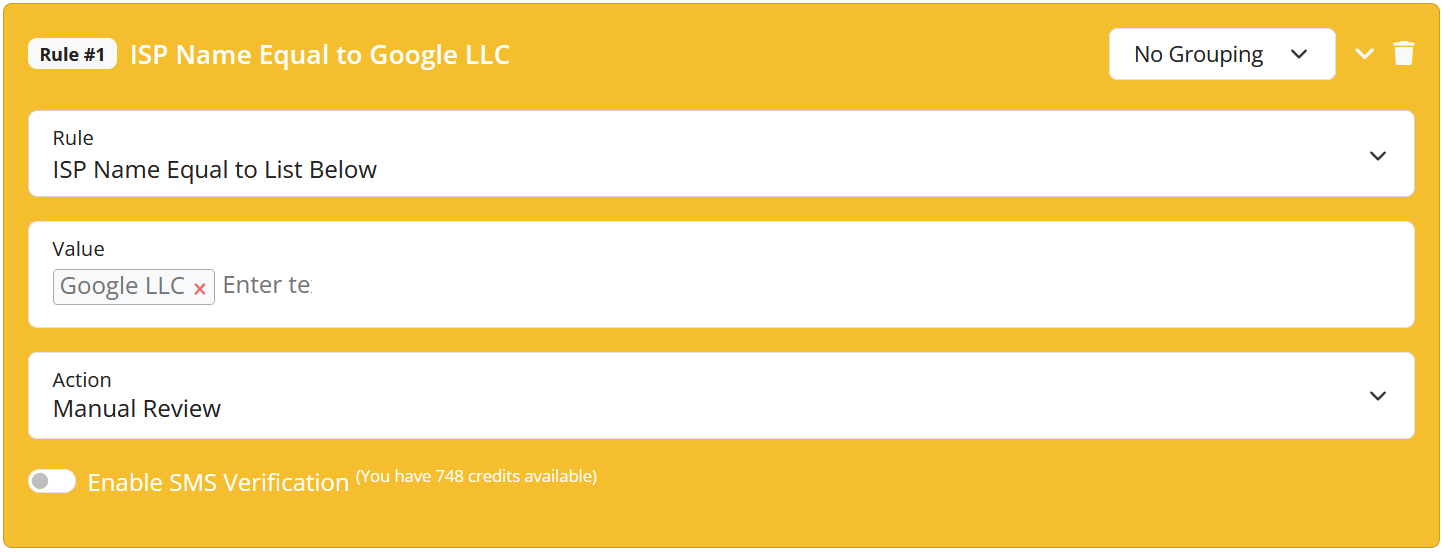
In conjunction with the ISP Name Validation, FraudLabs Pro has introduced a new validation rule for that. This rule is accessible on the Rules Management page and is available exclusively to merchants subscribed to the Small plan or higher.
Conclusion
ISP Name Validation is a simple yet powerful security measure that helps merchants to understand who is really behind a connection. By distinguishing between the typical consumer ISPs and suspicious network sources, businesses can filter high-risk traffic, detect fraud early, and maintain trust with legitimate customers. With the introduction of the new ISP-based rules, merchants now have even more precise control over how ISP data shapes their fraud prevention strategy.
Secure Transactions, Seamless Business
Say goodbye to fraud worries! Secure your online store with FraudLabs Pro now.